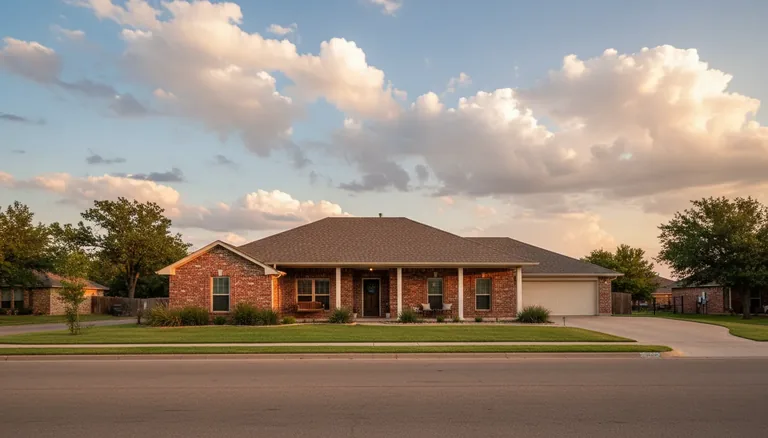
Selling a House in Probate in Oklahoma
Oklahoma probate normally runs six to twelve months, and selling the house usually needs a court-ordered sale under Title 58, not just an executor's signature.
See Your Options for Selling in Oklahoma CityWhat Probate Means for a House in Oklahoma
When someone dies owning a house in Oklahoma titled only in their name, that house does not automatically pass to the heirs. It becomes part of the probate estate, and Oklahoma law controls how — and whether — it can be sold before an executor or heir ever lists it. Probate is the court process that identifies the decedent's assets, resolves valid debts, and transfers what remains to the people entitled to it.
Oklahoma's probate code is Title 58 of the Oklahoma Statutes. If the person died without a will, Title 84 governs who inherits and in what shares — but Title 84 does not skip the court process for real estate; it only decides who receives the house once probate runs its course.
- A house titled solely in the decedent's name almost always requires court probate before it can be sold or transferred, regardless of how much equity or debt is attached to it.
- A will does not avoid probate. It tells the court whom to appoint and who inherits, but the estate — including the house — still goes through the court.
- Some ownership forms let a house skip probate entirely — most commonly a transfer-on-death deed or joint tenancy with right of survivorship, covered later on this page.
- The person handling the estate is called the Personal Representative (PR) — an executor named in a will, or an administrator appointed by the court when there is no will.
This page explains how Oklahoma probate generally works for a house. It is general information, not legal advice, and county practice can vary — confirm specifics with the district court clerk or a probate attorney before acting.
The Pathways Through Probate — and Why a Small Estate Affidavit Won't Transfer a House
Oklahoma offers more than one path through probate, and which one applies depends on the estate's size, how long ago the person died, and where the decedent lived. Four terms come up constantly for a house in this situation — and the only one that works without any court case at all is exactly the one that cannot move a house.
- Regular (formal) probate — the default process under Title 58. The court appoints a Personal Representative, who inventories assets, notifies creditors, and eventually distributes or sells the property under court supervision.
- Summary administration (58 O.S. § 245) — a compressed version of probate, commonly resolved at a single combined hearing, available only when the estate qualifies.
- Ancillary probate — used when someone who lived outside Oklahoma died owning Oklahoma real estate; it recognizes an out-of-state probate case so the Oklahoma property can be sold or transferred.
- Small estate affidavit (58 O.S. § 393) — a sworn statement that transfers up to $50,000 of personal property without a court case. It cannot touch real estate, including a house.
Summary Administration's Three Doors
Summary administration is available if the estate meets any one of three conditions — not all three. The estate's total value is $200,000 or less (commonly read as gross asset value, not net equity, in practice), or the decedent died more than five years before the case is filed, or the decedent was not a resident of Oklahoma. Meeting just one condition qualifies the estate for the streamlined process, which can move to a final decree in roughly two to three months.
Under the summary procedure, letters of special administration can issue at filing without a preliminary hearing, and creditor claims are barred 30 days after the combined notice order (58 O.S. § 246). An accounting can be waived under 58 O.S. § 541 with court approval. The $200,000 ceiling itself has moved over time — it rose from $175,000 to $200,000 under a 2013 law (HB 2790), so older discussions of the threshold may be out of date.
Ancillary Probate for Out-of-State Owners
Ancillary probate applies when the decedent lived in another state but owned a house in Oklahoma. A streamlined route under 58 O.S. § 677 lets the estate use certified copies of the foreign will, the order admitting it to probate, and the order of distribution from the home state. In practice, some out-of-state cases — Texas independent administrations in particular — never generate a formal order of distribution, which forces the Oklahoma case into a standard or summary probate instead of the shortcut.
The small estate affidavit deserves its own emphasis, because it is the most common point of confusion for heirs searching for a fast option. However small the house's value, or however little equity is left after the mortgage, an affidavit cannot convey real property in Oklahoma. A house titled solely in the decedent's name needs a probate case — regular or summary — no matter how modest the estate. Heirs who assumed the affidavit would cover a house should read what the small estate affidavit actually covers before filing anything.
A small estate affidavit can move a car, a bank account, or furniture. It cannot move a deed. If the estate's only real asset is a house, plan on a probate case.
Selling a House During Probate Under Title 58
A Personal Representative cannot simply sign a listing agreement and close a sale the way an individual homeowner would. Selling estate real property in Oklahoma runs through the probate court from petition to confirmation.
- The PR petitions the court for authority to sell — an Order Authorizing Sale is required when the will does not already grant a power of sale (58 O.S. § 239).
- The court appoints appraisers to value the property (58 O.S. §§ 412–416).
- Notice of the sale is published for two consecutive weeks (58 O.S. § 421).
- Once a sale is arranged, the PR files a Return of Sale and the court holds a confirmation hearing.
- After confirmation, the PR's deed conveys title to the buyer.
The 90% Rule and Overbids at Confirmation
At a private sale, Oklahoma law does not let the estate accept just any offer. Under the 90% rule (58 O.S. § 424), the accepted price cannot fall below 90 percent of the appraised value, and that appraisal cannot be more than one year old at the time of sale. If the market has moved since the appraisal, a fresh one may be needed before the sale can close.
The confirmation hearing is also where a competing buyer can step in. Oklahoma allows overbids in open court: if a qualified buyer offers more than the contract price at the hearing, the court can confirm the sale to the higher bidder instead, or order a new sale. Local practice commonly expects a raise to clear the existing contract price by at least 10 percent, exclusive of the costs of a new sale, before the court will entertain it. This step surprises people who expect a probate sale to close like an ordinary residential transaction, but it is a normal part of the Oklahoma process.
If the will grants the Personal Representative a power of sale, the PR can convey the property by PR's deed without going through the full confirmation cycle described above — a meaningfully faster route when the will includes that language.
Once a sale is confirmed, the recorded deed and, where applicable, the recorded Order Confirming Sale are what a title company relies on to insure the buyer's title. Sale proceeds stay in the estate's account; they cannot go to heirs until the court approves the estate's accounting and outstanding debts are resolved.

Two Ways a House Can Skip Probate Entirely
Not every house in Oklahoma has to go through probate. Two ownership arrangements move title automatically at death, without a court case for that property — but each has a strict step that must be handled correctly.
Transfer-on-Death Deed and the Nine-Month Deadline
A Transfer-on-Death (TOD) deed, created under Oklahoma's Nontestamentary Transfer of Property Act (58 O.S. §§ 1251–1258), lets an owner name a beneficiary who receives the house automatically at death. While the owner is alive, the deed conveys nothing — the owner keeps full control and can revoke it, sell the house, or mortgage it without the named beneficiary's consent.
The catch comes after death: the beneficiary must record an acceptance affidavit, along with a certified death certificate, in the county clerk's office within nine months of the date of death (58 O.S. § 1252). Miss that window and the transfer is voided — the property falls back into the probate estate as if the deed had never been recorded.
Notice-and-acceptance mechanics are spelled out further in § 1252(B)–(C) and § 1252(E). A properly completed TOD transfer is one of the few ways to move a house out of an Oklahoma estate without probate at all; more detail on the deadline and how to record the acceptance is on the transfer-on-death deed page.
Joint tenancy with right of survivorship works differently. When one joint tenant dies, title vests in the surviving owner or owners immediately, by operation of law — no probate case is needed for that interest. To make the title marketable for a future sale, the survivor typically records an affidavit of surviving/terminating joint tenant (58 O.S. § 912) along with a certified death certificate in the county records. Because Oklahoma's estate tax was repealed for deaths on or after January 1, 2010, there is no tax lien or tax release to clear before title passes.
How Long Probate Takes in Oklahoma
Timelines vary by county and by how contested the estate is, but a few benchmarks hold up in current Oklahoma practice.
| Stage | Typical timeframe |
|---|---|
| Filing the petition to Letters Testamentary or Administration | A few weeks in Oklahoma County with clean paperwork |
| Notice to Creditors claim period | 2 months from first publication (58 O.S. § 331) |
| Summary administration, filing to final decree | About 60-90 days |
| Regular (formal) probate, filing to final decree | About 6-12 months |
| Earliest realistic house closing in regular probate | Commonly several months in; reported faster when the court expedites the order of sale |
A house does not have to wait for the entire case to close. Oklahoma allows a court-ordered sale in the middle of a probate case, so the property can be marketed, appraised, and sold while the rest of the estate — creditor claims, other assets, final accounting — is still working through the court. Even so, a sale under regular probate rarely closes in the first few weeks; the appraisal, notice, and confirmation steps described earlier all take real calendar time.
Attorneys in Oklahoma County can file electronically through the state court network, which lets paperwork move without courthouse visits. E-filing has not shortened the statutory waiting periods — the two-month creditor window and the published notice periods run on the calendar regardless of how fast the paperwork moves.
What Probate Costs in Oklahoma
Court and professional costs for an Oklahoma probate case break into a few predictable categories.
| Cost | Amount |
|---|---|
| Oklahoma County filing fee | $204.14 |
| Tulsa County filing fee | Roughly $200-250 |
| Publication of required notices | Commonly $100-250 |
| Residential appraisal | Several hundred dollars; $400-600 is a typical quote |
Personal Representative compensation follows a statutory fee schedule (58 O.S. § 527) built on percentage tiers — 5 percent, then 4 percent, then 2.5 percent as the estate value rises. The first two tiers cover only the first few thousand dollars of the estate, so in practice the fee works out to roughly 2.5 percent of most of a typical estate's value. Family members serving as PR often waive this statutory commission rather than collect it.
- Many Oklahoma attorneys handling straightforward, uncontested summary probates quote a flat fee instead — commonly in the $2,500-5,000 range for uncontested cases.
- Documentary stamp tax applies separately at closing and is covered in the next section.
- Abstract and title work add their own line items, described below.
Abstracting and Title Work Take Extra Time
Oklahoma still relies on a physical abstract of title, brought current by a licensed abstract plant, plus an attorney's title opinion, before a title company will issue insurance. That step typically adds two to four weeks to a closing timeline, so even an all-cash buyer should plan on roughly a 30-45 day escrow rather than the faster closings common in states without an abstract requirement.

Oklahoma Taxes on a Probate House Sale
Oklahoma's tax picture for a probate sale is simpler than in many states. There is no Oklahoma estate tax — it was repealed for deaths on or after January 1, 2010 — and no Oklahoma inheritance tax. Neither applies to a 2026 probate case regardless of the estate's size.
- Property tax does not pause during probate. The estate, or the heirs once distribution occurs, must keep paying the county treasurer on schedule to avoid penalties or a tax sale.
- Oklahoma charges a documentary stamp tax on the sale itself: $0.75 per $500 of the sale price, roughly 0.15 percent, paid out of the seller's proceeds at closing (68 O.S. § 3201).
- Two transfers are exempt from the documentary stamp tax: a Personal Representative's Deed of Distribution to an heir, and an executor's deed conveying property without consideration under a will (68 O.S. § 3202). The exemption reference must be printed on the face of the deed to be honored at the county clerk's office.
One more Oklahoma-specific wrinkle affects sellers rather than the estate's tax bill: a fiduciary who never personally lived in the house is exempt from filling out the standard Residential Property Condition Disclosure statement (60 O.S. § 831 et seq.) and instead signs a shorter disclaimer form (60 O.S. § 838). That distinction matters for anyone preparing to sell an inherited house in Oklahoma City, where disclosure paperwork is one of the first things a listing agent or title company asks about.
The Oklahoma City Market for an Inherited House
Oklahoma County District Court's probate division sits downtown in Oklahoma City, and probate house sales in the metro often get measured against the local resale market to judge whether a court-ordered sale price is reasonable.
Redfin data for the city of Oklahoma City, mid-2026, puts the median home sale price at roughly $270,000, with homes averaging about 38 days on market and a sale-to-list ratio of 98.3 percent — meaning most homes sell close to their asking price. Because appraisals for a Title 58 sale cannot be more than a year old, a case that has been open for a while may need an updated appraisal to stay aligned with current values.
Inherited houses sold as-is to cash investors typically go for a discount below fully renovated market value. Industry estimates put that gap roughly in the 10-30 percent range, depending on the house's condition and how much repair work a buyer expects to take on — figures vary by source and should be treated as rough guidance, not a quote.
Whether a court-supervised market listing or an as-is cash sale makes more sense depends on the house's condition, how much time the estate has, and how many heirs need to agree. The trade-offs specific to this market are laid out further in the cash-sale math for an inherited Oklahoma City house.
Mineral Rights and Co-Heir Disagreements
Two Oklahoma-specific complications come up often enough to flag on their own, even though most probate house sales never run into either one.
Check mineral ownership and heir agreement early in the case — both can add months to a sale if they surface late.
Mineral rights are frequently severed from the surface estate in Oklahoma, meaning the family that owned the house may not own what sits underneath it. Before listing, an heir or PR should check whether the estate actually holds the mineral interests at all — residential purchase contracts commonly convey the surface only and carve out minerals by default. Where severed mineral interests need to be cleared or documented, an affidavit under 16 O.S. § 67 may come into play for that narrow purpose, depending on how the interest is held.
- Co-heirs hold the house as tenants in common, and a sale on the open market needs unanimous agreement among them.
- Any co-owner can file a partition action (12 O.S. § 1501 et seq.) if agreement breaks down, asking the court to divide the property or order it sold with proceeds split.
- Partition is slow, becomes part of the public court record, and its costs come off the top of the proceeds — generally treated as a last resort rather than a first move.

Frequently Asked Questions
Can a small estate affidavit transfer a house in Oklahoma?
How long does probate take in Oklahoma?
What is the 90% rule for a probate house sale?
What happens if a TOD deed beneficiary misses the nine-month deadline?
Does Oklahoma have an estate tax or inheritance tax?
Can co-heirs be forced to sell an inherited Oklahoma house?
Ready to learn more?
Get in touch for more information about probate property sale in Oklahoma.
See Your Options for Selling in Oklahoma City