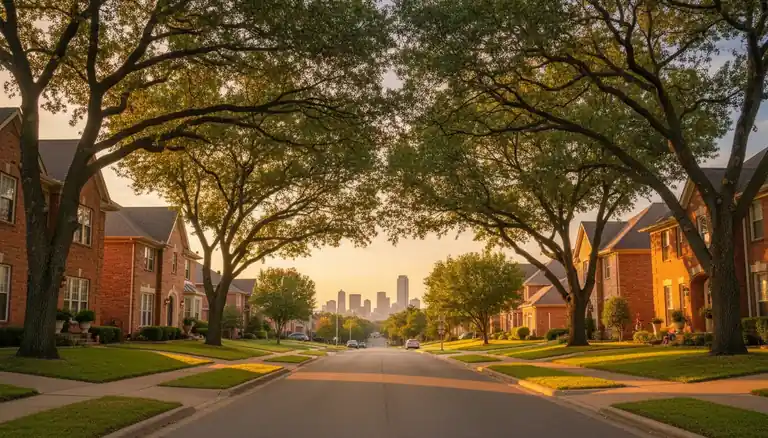
Sell an Inherited House in Oklahoma City
Oklahoma City homes sold for a median of about $270,000 in mid-2026, but a house titled only in a deceased owner's name still needs Oklahoma probate before it can close.
See Your Options for Selling in Oklahoma CityFirst Steps After Inheriting a House in Oklahoma City
Before you can sell the house, you need to know how title actually passed to you. Oklahoma recognizes several routes, and the one that applies determines whether you can list the property tomorrow or need a probate case first.
Confirm How Title Passed
- Was a probate case already opened in Oklahoma County District Court? If so, the court, not you alone, controls the sale until a Personal Representative is appointed and, in most cases, until the sale is confirmed at a hearing.
- Did the deceased owner record a Transfer-on-Death deed naming you as beneficiary? If so, the property can bypass probate entirely, but only if an acceptance affidavit and certified death certificate are recorded with the county clerk within 9 months of the date of death.
- Did you and the deceased own the property as joint tenants with right of survivorship? Title vests in the survivor automatically at death, and you generally only need to record an affidavit terminating the joint tenancy along with a certified death certificate to make title marketable.
- Was the house titled solely in the decedent's name, with no TOD deed and no joint tenancy? Then it has to go through court probate, regular or summary, no matter how modest its value. A small estate affidavit can transfer personal property but cannot transfer real estate.
For a broader walkthrough of these pathways and how they fit together, see our Oklahoma probate house-sale guide. If a Transfer-on-Death deed is part of your situation, the transfer-on-death deed rules page covers the nine-month acceptance deadline in detail, and if you are wondering whether a small estate affidavit could apply, that page explains why it works for bank accounts and vehicles but not for a house.
Filing in Oklahoma County: Venue, E-Filing, and Timelines
If the house does need to go through probate, the case for an Oklahoma City resident is filed in Oklahoma County District Court, probate division, downtown Oklahoma City. For an out-of-state owner of Oklahoma City property, the right venue and procedure depend on the case — ancillary probate is the usual route, and the details are worth confirming before filing.
E-filing is live for attorneys handling Oklahoma County probate cases through the state court network, though the filing method itself does not shortcut the process. Statutory waiting periods and the court's own docket, not e-filing, set the real pace of a case.
| Probate track | Typical duration | When it applies |
|---|---|---|
| Summary administration (58 O.S. § 245) | Roughly 60-90 days to a final decree | Estate value at or below $200,000 (commonly read as gross asset value), OR decedent dead more than 5 years, OR decedent was a non-resident of Oklahoma |
| Regular (formal) probate | Roughly 6-12 months | The default track when none of the summary triggers apply |
The Oklahoma County probate filing fee is $204.14. Filing in Tulsa County runs roughly $200-250 for comparison, if that ever becomes relevant to your case.
With clean paperwork, Letters Testamentary or Letters of Administration are commonly issued a few weeks after filing in Oklahoma County. Once a Notice to Creditors is first published, creditors get two months to file claims against the estate. A house can be sold before the whole case closes through a court-ordered sale mid-case, but realistic closings in a regular probate commonly land months in, not weeks.
Why an Abstract of Title Turns Even a Cash Closing Into a 30-45 Day Escrow
Oklahoma is one of the states that still relies on a physical abstract-of-title system rather than title insurance alone. Even when a buyer pays all cash and waives every contingency, closing typically cannot happen in a week.
What the Abstract Process Adds
- A licensed abstract plant has to bring the property's abstract of title up to date, reflecting the recorded chain of ownership.
- An attorney then reviews the updated abstract and issues a title opinion before a title company will issue title insurance.
- In a court-confirmed estate sale, the recorded Order Confirming Sale and the Personal Representative's deed have to appear in that chain before the abstract can be finalized; a power-of-sale conveyance follows its own paper trail.
In practice, this step commonly adds about two to four weeks on top of an ordinary closing timeline. A realistic escrow for an inherited Oklahoma City property, even on an all-cash offer, runs closer to 30 to 45 days than the week or two sometimes advertised by fast-close buyers.

Comparing Your Selling Options: Open Market vs. As-Is Cash Buyers
Heirs generally weigh two paths: listing the house on the open market through a real estate agent, or accepting an as-is offer from a cash or investor buyer. Each trades speed and certainty for price in different ways.
| Factor | Open-market listing | As-is sale to a cash buyer |
|---|---|---|
| Local reference point | Redfin, city of Oklahoma City, mid-2026: median sale price about $270,000, homes averaging roughly 38 days on market | Not tied to list-price timelines; cash buyers can typically move to an offer faster than a conventional listing |
| Price you can expect | Closer to full market value, minus closing costs, repairs, and any staging | Roughly 10-30% below market value depending on condition, an industry estimate that varies by buyer and property |
| Condition expectations | Buyers may request repairs or price concessions after inspection | Companies that buy houses for cash generally purchase as-is |
| Time to close | Bound by financing, inspection windows, and the abstract and title-opinion process | Agreement can be reached faster, though the same Oklahoma abstract process still applies before the deed records marketably |
Which Path Fits an Inherited House?
Neither path is universally better; the right choice depends on the house's condition, how quickly the estate needs cash, and how many heirs are involved. Various companies that buy houses for cash operate in the Oklahoma City area, and this page describes the mechanics neutrally rather than recommending any specific one. If probate is still open, remember that selling estate real property needs court authority regardless of which type of buyer you choose.
At a private probate sale, the 90% rule (58 O.S. § 424) bars accepting a price below 90 percent of an appraisal no older than one year. At the confirmation hearing, the court can accept a qualified higher bid in open court. When a will grants a power of sale, the Personal Representative may in some cases convey by deed without the full confirmation cycle.
The Fiduciary Disclosure Exemption
Oklahoma law generally requires sellers of residential property to complete the detailed Residential Property Condition Disclosure statement. Personal Representatives selling an inherited house get a narrower path.
- Under 60 O.S. § 838, a fiduciary who never occupied the property, including a Personal Representative, is exempt from completing the full condition disclosure statement.
- Instead of the long form, that fiduciary signs a shorter disclaimer statement.
- The exemption reflects the reality that an heir or Personal Representative who never lived in the house often cannot answer detailed questions about its roof age, plumbing history, or past repairs.
This exemption applies specifically to non-occupant fiduciaries. Heirs who did live in the home, or who take title outside a fiduciary capacity, such as after a completed Transfer-on-Death transfer, should confirm which disclosure form applies to their situation, generally with a real estate professional or attorney.
Mineral Rights: A Distinctly Oklahoma Wrinkle
Oklahoma has a long history of oil and gas development, and it is common for mineral rights beneath a residential lot to have been severed from the surface estate generations ago, sometimes without the current family realizing it.
- Before listing or accepting an offer, check whether the estate actually owns the minerals under the house, or whether they were severed and sold or leased separately long before the current owner acquired the property.
- Residential purchase contracts commonly convey the surface estate only, with mineral rights carved out or reserved; buyers and title companies in Oklahoma routinely expect this distinction.
- Where severed mineral interests need to be formally identified or cleared, an heirship affidavit under 16 O.S. § 67 may come into play, depending on how the interest is held.
Mineral ownership questions can be more involved than a typical residential closing, particularly for older properties or those near historically productive areas. When in doubt, a local title company or attorney can confirm what the estate does and does not own before a contract is signed.

When Co-Heirs Disagree
It is common for a house to pass to more than one heir at once, and their agreement, or disagreement, on a sale directly affects how quickly it can move.
- Heirs who inherit together typically hold the property as tenants in common, and selling it on the open market requires unanimous agreement among all co-owners.
- If even one heir refuses to sign off, any co-owner can file a partition action asking the court to divide the property or, for a house, more typically order it sold with proceeds split among the owners.
- Partition actions are public, can take considerable time, and the associated fees come out of the property's value before proceeds are distributed, so most families treat partition as a last resort rather than a first step.
A national movement toward more heir-friendly partition procedures has been adopted in some states, but Oklahoma's partition disputes are generally still governed by the state's standard partition statutes under 12 O.S. § 1501 et seq.
Costs of Selling at Closing
Between probate costs and closing costs, an inherited Oklahoma City sale carries a few charges that a typical home sale does not. None of these are federal tax topics; they are Oklahoma-specific fees and statutory items.
| Cost | Amount | Notes |
|---|---|---|
| Documentary stamp tax | $0.75 per $500 of sale price, about 0.15% | Generally paid out of the seller's proceeds at closing; a Personal Representative's deed of distribution to an heir, and an executor's deed without consideration under a will, are exempt under 68 O.S. § 3202 |
| Oklahoma County probate filing fee | $204.14 | Paid once, when a case is opened, if probate has not already been filed |
| Notice publication | Commonly $100-250 | Covers required probate notices such as the Notice to Creditors and the notice of sale |
| Personal Representative statutory fee | Tiered schedule under 58 O.S. § 527 | Family Personal Representatives commonly waive this fee in practice; attorneys often charge flat or hourly instead, with flat fees of roughly $2,500-5,000 commonly quoted for uncontested summary probates |
| Residential appraisal, if court-ordered | Commonly quoted around $400-600 | Required when the court orders an appraisement as part of authorizing a probate sale |
Property tax also keeps accruing during probate, and the estate or heirs need to keep the county treasurer current regardless of which selling path is chosen. For the broader mechanics of a probate sale across Oklahoma, revisit our probate sale overview.
Frequently Asked Questions
Can I sell an inherited house in Oklahoma City before probate closes?
Do I need a full disclosure form if I inherited the house and never lived there?
How long does closing take on an all-cash Oklahoma City offer?
What if my siblings and I cannot agree on selling?
Does Oklahoma still tax the estate or the sale?
Should I check whether the estate owns the mineral rights?
Ready to learn more?
Get in touch for more information about probate property sale in Oklahoma.
See Your Options for Selling in Oklahoma City